
The Story Behind De Orilla
Why I chose the name "De Orilla" (Shoreline)? The question seems simple, but every time I try to answer it, I discover that the answer is more complex than I first imagined. I could say that I have always loved the ocean. That I enjoy walking along the beach, scuba diving, hiking trails, or gazing at the stars. All of that is true, but it does not fully explain what De Orilla means to me. The reality is ... (continue reading)
DEORILLA
Why I chose the name "De Orilla" (Shoreline)? The question seems simple, but every time I try to answer it, I discover that the answer is more complex than I first imagined.
I could say that I have always loved the ocean. That I enjoy walking along the beach, scuba diving, hiking trails, or gazing at the stars. All of that is true, but it does not fully explain what De Orilla means to me. The reality is that this project began long before there was a website, a camera, or an Instagram account. It began with a particular way of seeing the world.
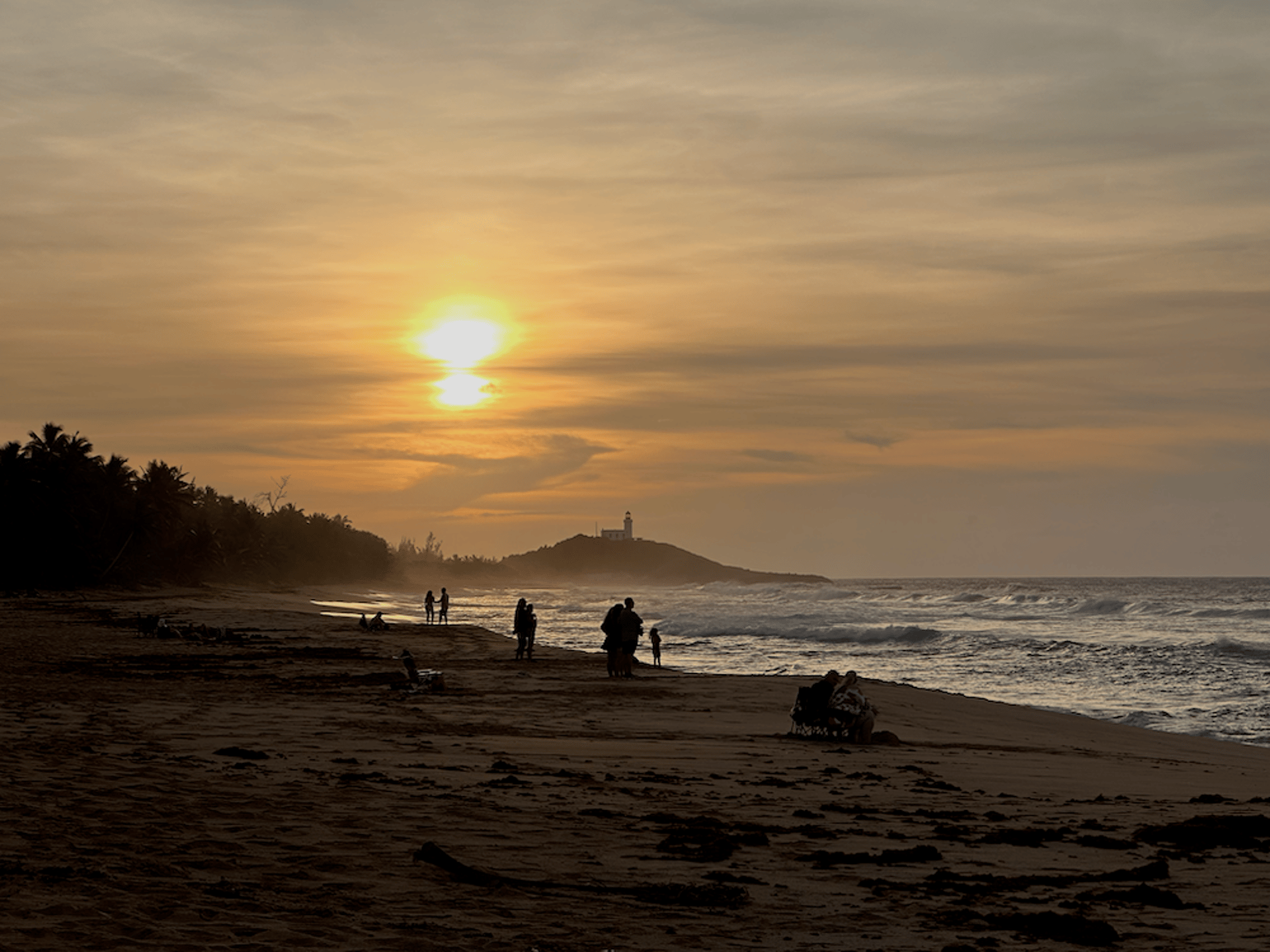
I grew up in Puerto Rico, surrounded by the sea. Like many children raised on an island, the ocean was simply part of everyday life. It was there during family trips to the beach, along coastal drives, and whenever we stood watching the horizon disappear into the distance. Yet as the years passed, I began to notice something that had previously escaped me. The shoreline was never the same. A place I had visited only weeks before appeared transformed. The sand had shifted, the waves arrived differently, and the tides had reshaped the landscape. Even the light could completely change the personality of a beach. What seemed permanent was constantly changing.
That seemingly simple observation stayed with me throughout my life. The more I observed nature, the more obvious it became that change was not the exception but a permanent condition of existence. Nothing remained still. Not the coastlines. Not the oceans. Not ecosystems. Not people.
I especially remember the days following hurricanes. In Puerto Rico, hurricanes are part of our collective memory. They are not merely weather events; they are experiences that leave lasting marks on both the landscape and those who live through them. After a major storm, we would often visit the coast to see what had changed. Those visits left a deep impression on me. Entire beaches seemed to have disappeared. Trees that had stood for years were gone. Sections of shoreline had been claimed by the sea while new stretches emerged elsewhere. Homes were damaged or lost. Those experiences taught me a lesson I still carry today: nature possesses a transformative power far greater than any illusion of control we may have.
Yet the shoreline also revealed another side of nature. After the storm came calm. There were days when the ocean seemed to breathe slowly, and the sound of the waves created a sense of peace that is difficult to describe. Sitting by the water, I could spend long periods simply observing. Nothing more was needed. In those moments, I realized that the same place capable of displaying immense power could also offer profound tranquility.
Years later, I studied engineering and built a professional career dedicated to understanding complex systems, evaluating risks, and analyzing how different elements interact with one another. I learned to look for relationships, patterns, and connections. Without realizing it, that way of thinking began to influence how I viewed nature. The shoreline was no longer just a beautiful landscape. It became a fascinating system where wind, currents, tides, geology, living organisms, and human activity continuously interact to create visible and invisible change. Everything was connected. Nothing happened in isolation.
Over time, I came to understand that our lives function in much the same way. We often attribute major changes to a single event, when in reality they are usually the result of countless experiences accumulated over time. A conversation, a seemingly small decision, an unexpected opportunity, or a loss can alter the course of our lives. Just as a beach changes grain by grain, we change experience by experience.
Meanwhile, my curiosity continued leading me down other paths. I began exploring trails, mountains, and forests. I discovered that walking has something deeply transformative about it. When we move slowly along a path, away from the noise of everyday life, we begin to notice details that would otherwise go unseen. The mind grows quieter. Attention expands. The journey becomes more than physical movement; it becomes an opportunity to observe, reflect, and learn.
Something similar happens when we look up at the stars. There are nights when the sky seems endless. From a dark beach, far from city lights, the Milky Way can stretch from horizon to horizon. In those moments, it is impossible not to feel a sense of wonder. We think about the distances separating the stars, the billions of years of cosmic history, and how small we are in comparison to such immensity. Paradoxically, I have never found that feeling discouraging. Quite the opposite. It reminds me that we are part of something extraordinarily vast and beautiful.
Over the years, I came to understand that exploring the ocean, walking the great paths of the Earth, and contemplating the stars are different expressions of the same search. All three awaken curiosity. All three remind us that there is far more than what we can immediately see. All three invite us to explore the unknown.
Perhaps that is why I have always considered myself an explorer—not because I have reached extraordinary places, but because I remain curious. I also consider myself a humble scientist, because the more I learn, the more aware I become of everything I still do not know. And somehow, I also find a spiritual dimension in that search. Not necessarily a spirituality tied to any specific religion, but rather the sense of connection that emerges when we encounter something greater than ourselves and recognize our place within it.
It was by bringing together all of these experiences that I finally understood the true meaning of the shoreline.
Over time, I discovered that the shoreline is not really a beach.
The shoreline is where I live.
It is the space between Puerto Rico and Maryland. Between my roots and the paths I continue to follow. It is the meeting place between engineering and nature, between reason and wonder, between science seeking understanding and spirituality seeking meaning. It is the point where the security of the known meets curiosity about the unknown. It is the space between who I have been during more than two decades of professional life and who I am still discovering I can become.
Perhaps that is why this project is called De Orilla. Because it does not describe merely a geographic place. It describes a way of being. A way of moving through life while recognizing that we are always in transition—always learning, exploring, and transforming.
Because the shoreline is not simply where land ends or where the ocean begins.
The shoreline is where worlds meet.
And where we are transformed.
_________________________
(c) 2026 deorilla.com
The views expressed here are my own and are provided for educational purposes only. They do not represent the views of any employer, agency, organization, or training agency.
ABOUT ALEXANDER VELÁZQUEZ
ENGINEER•SCUBA DIVER • PHOTOGRAPHER
AUTHOR • MUSICIAN • EXPLORER
A personal exploration of oceans, landscapes, ideas, and the connection between them.
YOUTUBE
FLICKR